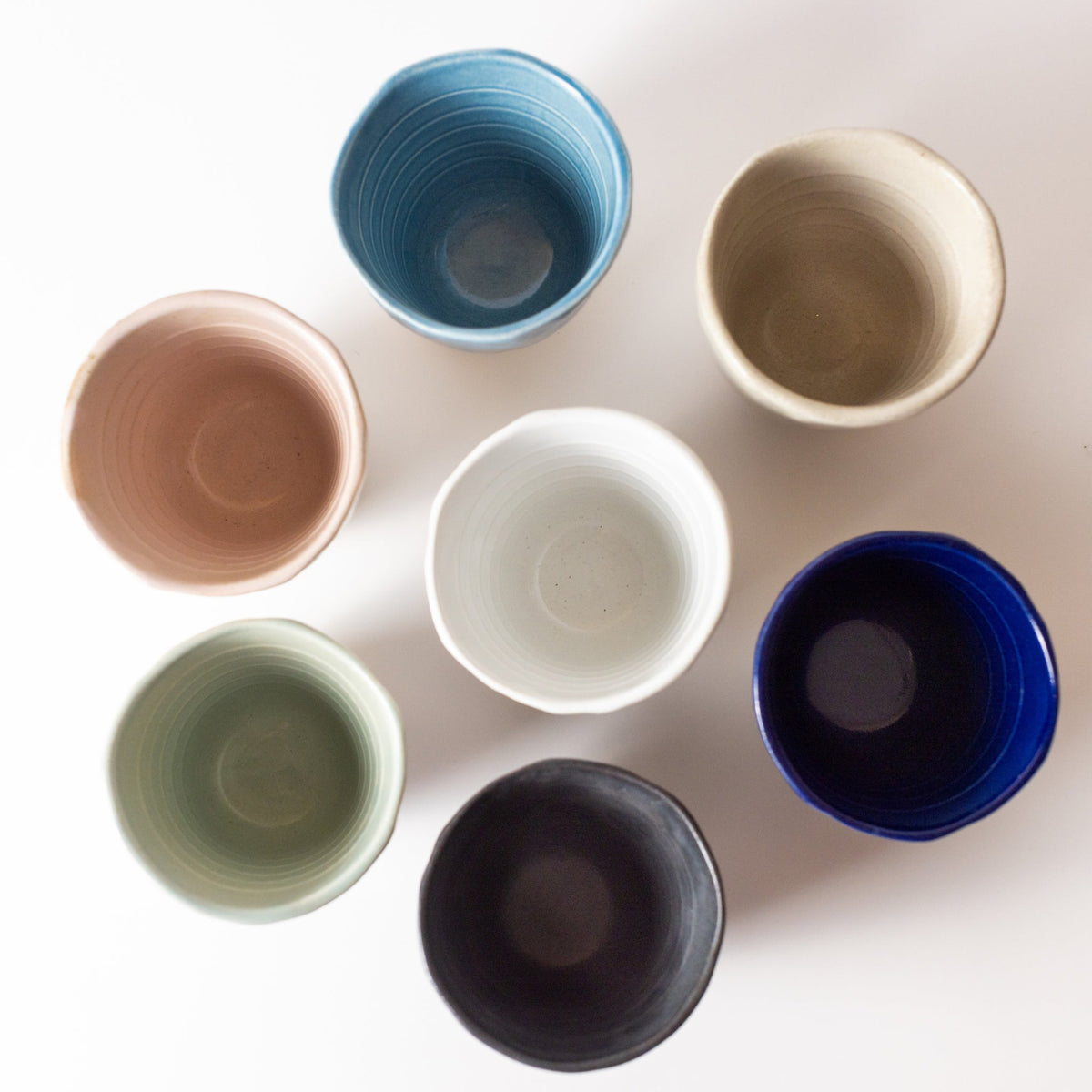
Once you've decided on a Lopsided mug, the hard part is picking a colour. The range runs from plain white to deep lapis blue, in two sizes, and every glaze behaves a little differently in the kiln. This guide goes through each one we carry at BEON, what it looks like in real life rather than on a screen, and which size suits which drink.

The full spread of glazes, each with the same bare bisque band at the base.
First, the size
There are two, and the difference is bigger in the hand than the numbers suggest.
- 200 ml (about 8 cm across, 7 cm tall). This is a tea cup more than a mug. It's right for sencha, genmaicha and hojicha, for a piccolo or a cortado, and for anyone with smaller hands. It sits nicely next to a plate at breakfast.
- 275 ml (about 9.3 cm across, 9.5 cm tall). This is the everyday mug. A regular latte, a pot's worth of English breakfast, a matcha latte with plenty of milk or a smoothie all fit comfortably.
Capacity is measured to the brim, so you'll actually drink a little less. A common approach is to buy the 275 ml for yourself and keep a few 200 ml cups for guests who want a quick tea. They nest well together on a shelf.
The light glazes
White & Bisque. A soft, slightly creamy white rather than a cold bright one, over the pale clay base. It's the most adaptable glaze in the range and goes with any tableware you already own. Good if you're buying for someone and don't know their kitchen.
Fawn & Bisque. A warm sandy beige with a glossy finish. The glaze runs during firing and leaves small drips toward the base, so each mug has its own pattern. It looks good next to timber and linen.
Sakura Pink. A pale blush named after cherry blossom. It's subtle in person, closer to a dusty pink than a sweet one, and pairs well with white or grey.
The greens and browns
Matcha Green. The most popular colour in the range, and the obvious choice for anyone who drinks matcha. It's a soft, slightly textured matte green, more sage than bright. It shows off the vivid green of whisked matcha nicely.
Hazel Brown. A rich glossy brown with variation from caramel to almost chocolate where the glaze is thickest. It suits coffee drinkers and looks at home on a dark timber table.
The darks and blues
Black & Bisque. A deep black glaze over the pale base, with a clear line where one meets the other. It's the most graphic of the range and works well in a monochrome kitchen.
Lapis. A newer glaze and a deep, saturated blue. Where the glaze is thinner, at the rim and on the high points of the lean, it lightens and shows streaks of tone. Lapis has the most movement of any glaze in the collection.
Topaz. The other newer glaze, a warm golden-amber with soft drips. It catches the light more than the others and looks especially good on a sunny bench.

Hazel Brown, 275 ml.

Lapis, 275 ml.

Eight glazes from above.
A few glazes come and go with each batch from the kiln. Navy Blue, Tomei and Kinoko Mushroom Grey have been in short supply, so if you see them listed as sold out on our page, they're between batches rather than gone for good.
Mixing colours
These mugs look better in a mixed group than in a matching row. A few combinations that work well:
- Earth tones: Fawn, Hazel Brown and Matcha Green. Warm and relaxed, good with timber and terracotta.
- Cool and calm: White, Lapis and Black. Crisp, with one strong colour doing the work.
- Soft: Sakura Pink, White and Topaz. Light and bright for a sunny kitchen.
Stick to one size within a group if you'll keep them stacked, since the 200 ml sits neatly inside the 275 ml but not the other way round.

Earth tones: Hazel Brown, Matcha Green and Black.

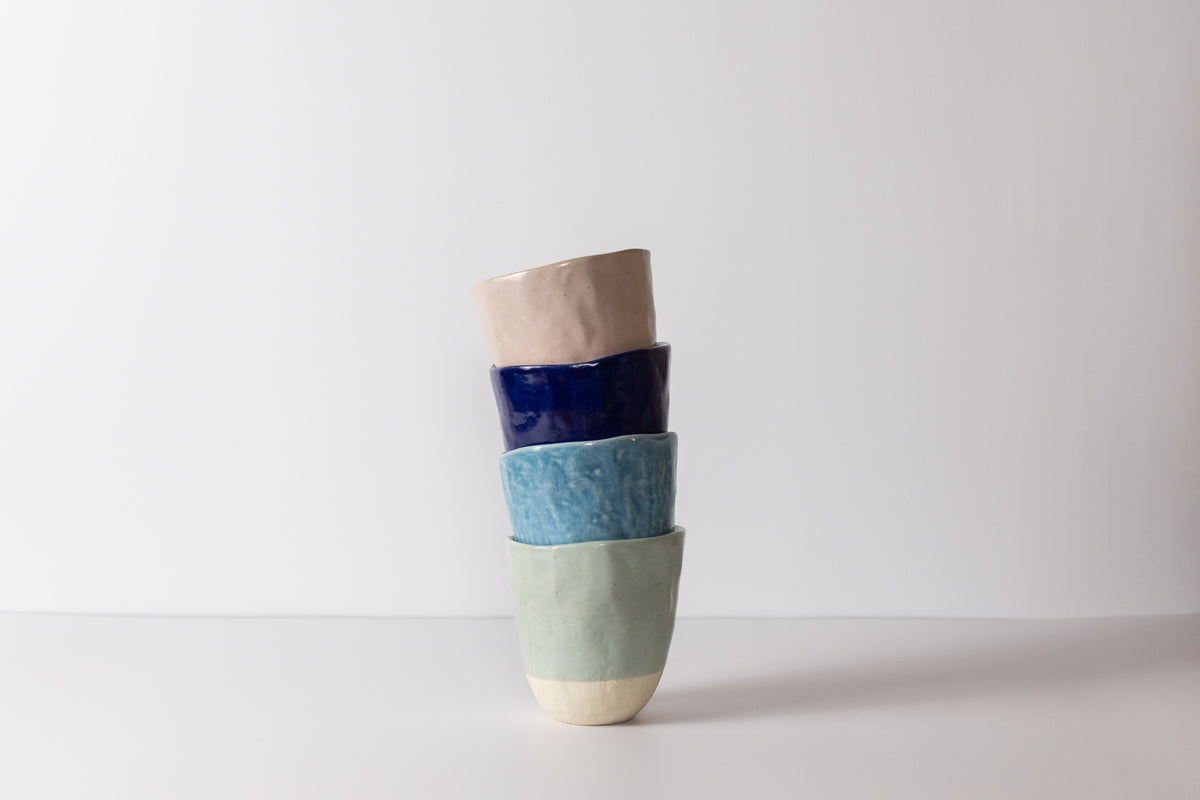
Blues and greens stacked together.
What to expect when it arrives
Because every mug is hand glazed, yours won't be identical to the photos. The lean may be more or less pronounced, the glaze may run a little further or stop a little shorter, and colour can shift slightly between batches. That's normal for handmade Japanese stoneware and part of what makes each one yours. Small pinholes or tiny specks in the glaze are also normal and don't affect use.
All Lopsided mugs are food safe and can go in the microwave and dishwasher. Avoid sudden jumps in temperature, and put a hot mug down on wood or cloth.
Choose your size and glaze on the Lopsided Mug page. For the story behind the kiln that makes them, read Lopsided mugs: the wonky tea cup from Gifu, and see the rest of our Japanese mugs and cups.